
In Jystrup, near Ringsted in Denmark, a housing cooperative has addressed a challenge facing many residential associations in rural areas: phasing out fossil heating in dense, low-rise developments where conventional district heating is not economically viable.
The Enghusene housing cooperative comprises two-storey terraced houses with 20 dwellings and a communal building. In 2025, the cooperative replaced a worn-out central gas boiler and insulated distribution pipes with a thermonet solution based on a shared horizontal shallow geothermal collector and decentralised heat pumps.
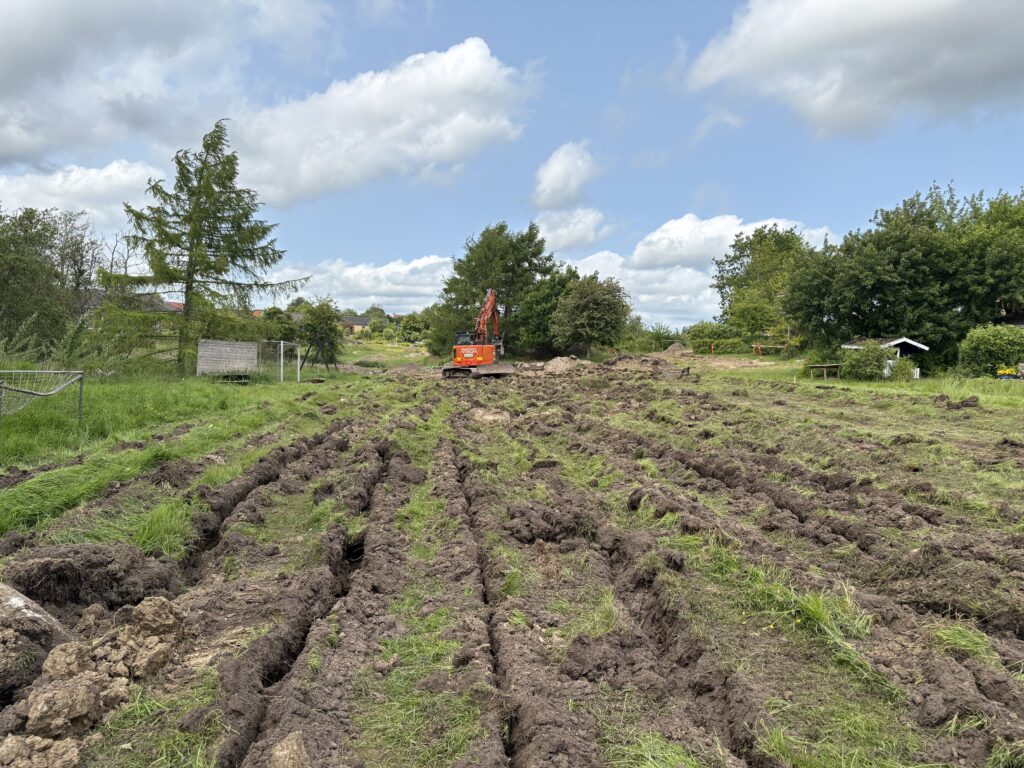
The project was carried out in collaboration with Ringsted Municipality, which made an adjacent municipally owned green area available for 4,800 metres of ground collector pipes ploughed in at approximately one metre depth.
The terraced houses were built in 1990 and the communal building in 1941. The original heating system consisted of a central natural gas boiler (Buderus SP 315, 115 kW) and a single-pipe, insulated distribution network with district heating units, hot water cylinders and radiators in each dwelling.
Prior to the renovation, maintenance costs for the gas boiler were high. When gas prices rose sharply in 2022, the cooperative’s climate working group, together with energy consultants, decided to investigate alternatives. A centralised solution with a single large heat pump and insulated pipes proved to be more expensive and less energy-efficient than the chosen thermonet solution with decentralised heat pumps.
The solution
The thermonet solution comprises three integrated elements: a horizontal shallow geothermal collector (ground source heat collector pipes), a thermonet of uninsulated PE pipes, and 21 decentralised heat pumps.
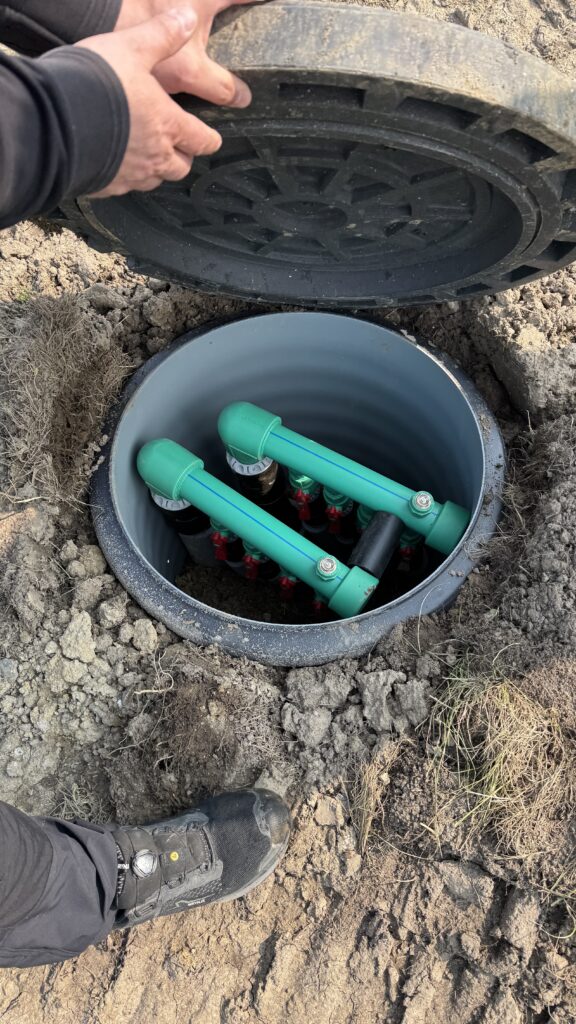
Thermal source: Heat is collected from approximately 4,800 metres of Ø40 mm PE pipes, ploughed in at roughly one metre depth in two fields on municipal land adjoining the cooperative’s property. The pipes are connected to four manifold chambers, each with four circuits of 300 metres. This division into sections prevents cascading failures and allows individual circuits to be isolated for maintenance without affecting the rest of the system.
Prior to installation, Ringsted Municipality carried out a screening for environmental impact in October 2024, which concluded that the project did not require a full environmental impact assessment. The assessment emphasised that the installation does not affect nearby Natura 2000 sites or groundwater. The nearest water supply borehole is located approximately 150 metres upstream of the project area.
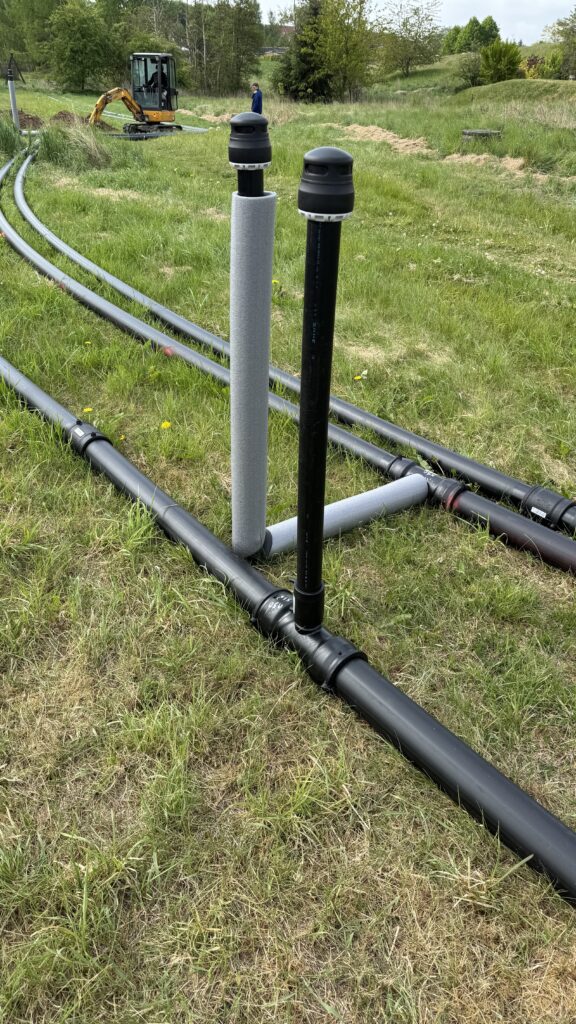
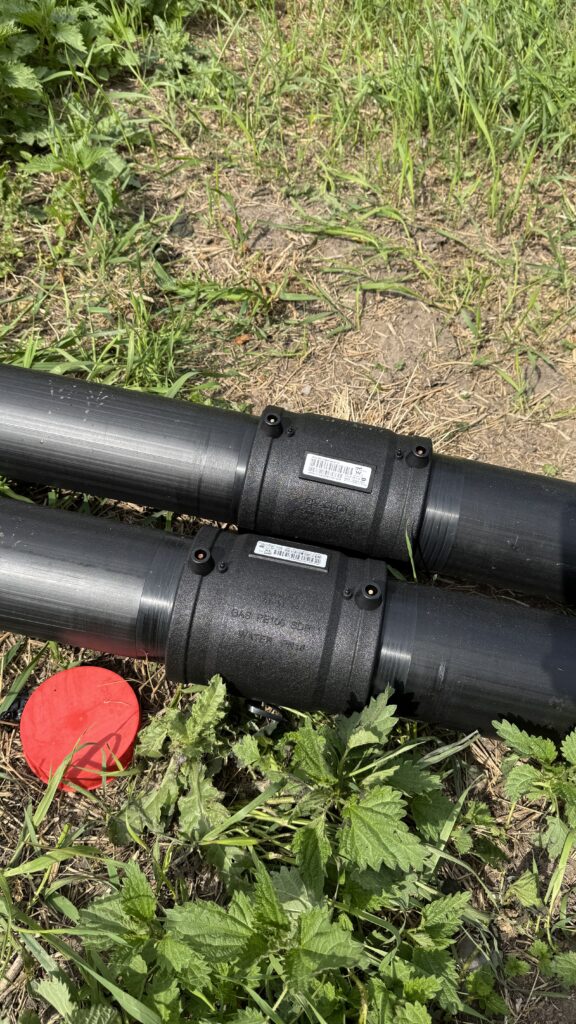
The thermonet is constructed from PE pipes. There is approximately 170 metres of pipework (flow and return) from the manifold chambers to the housing area and approximately 200 metres of distribution pipework within the housing area itself. In parts of the housing area, limited space required flow and return pipes to be laid in a shared trench. In those sections, insulation has been added to the flow pipes. The thermonet circulates brine consisting of water and biodegradable IPA (isopropyl alcohol) as antifreeze, identical to what is commonly used in ground source heat systems. Flow temperature varies between approximately 2°C and 10°C depending on the season.
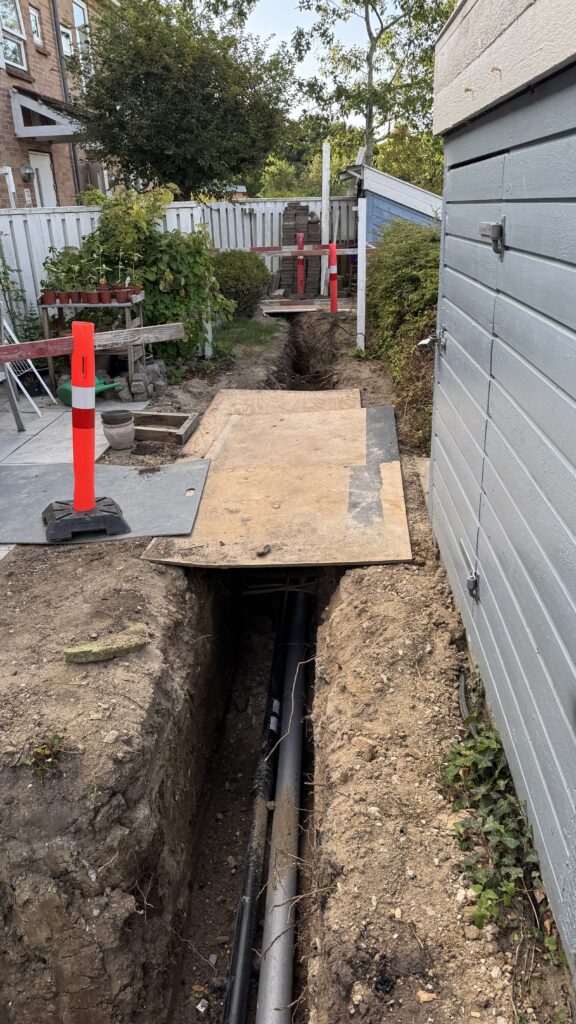
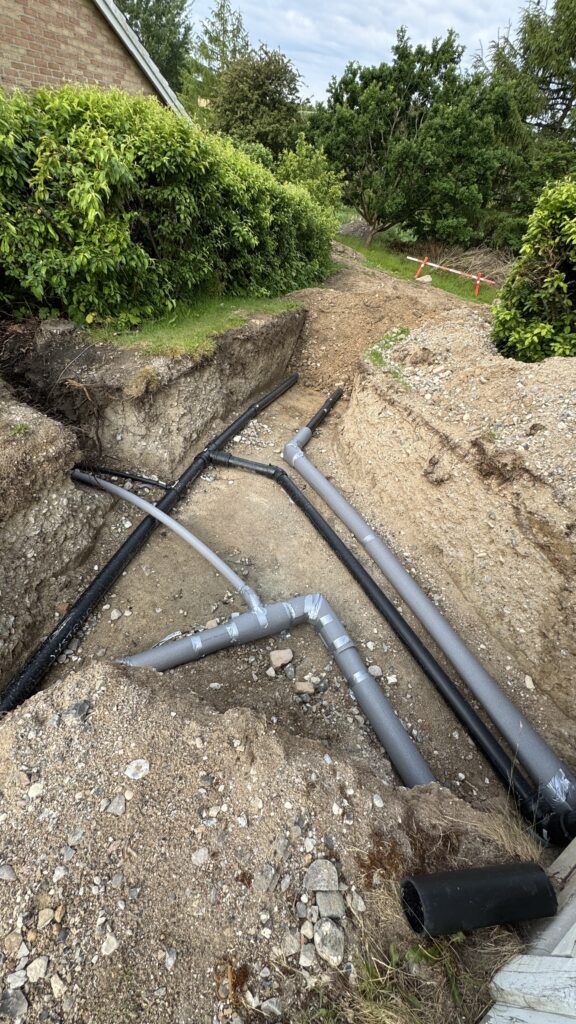
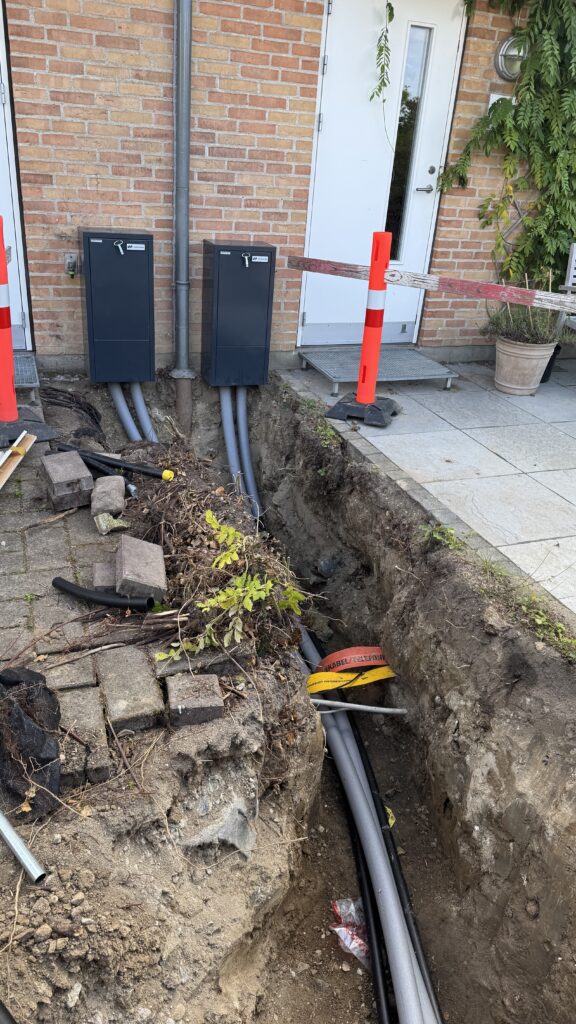
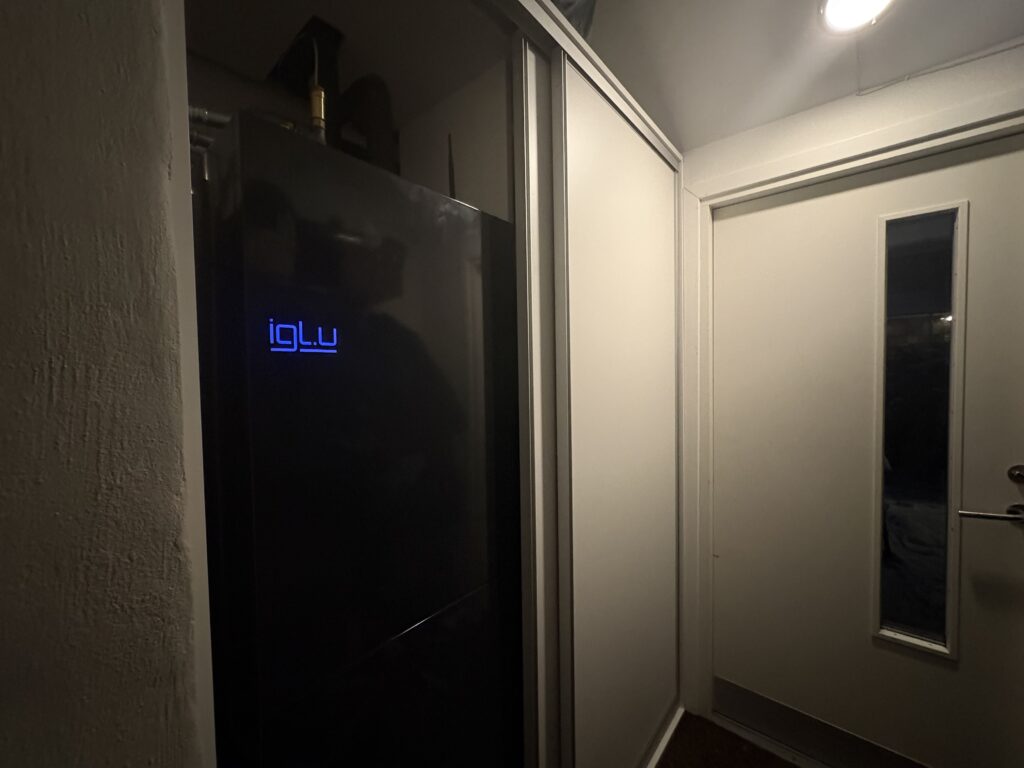
Heat pumps: Each of the 20 dwellings and the communal building has been fitted with an IGLU Aleut brine-to-water heat pump with variable capacity of 1.5–7 kW and an integrated hot water cylinder. The heat pumps have a compact footprint (60 × 63 cm, 180 cm tall) and are housed in a cupboard in the entrance hall of each house, occupying the space previously taken by the district heating unit and hot water cylinder. The heat pumps are inverter-driven and weather-compensated with a flow temperature mixing valve, ensuring smooth operation and minimising noise. Each resident can monitor their own consumption and adjust room temperature via a mobile app. Four residents have been trained as super users and assist neighbours with setup and troubleshooting. The heat pumps can also be monitored remotely by the installer. The heat pumps are owned by the housing cooperative. Residents pay individually for the electricity consumed by their own heat pump.
Finances
The total installation cost was approximately DKK 6 million (2025 prices). This covered removal and excavation of the old system, ploughing in of ground collector pipes, construction of the thermonet and installation of 21 heat pumps, as well as reinstatement of communal areas, front gardens, and entrance halls including new cupboards.
The combined system has a maximum output of 147 kW. The project was therefore not subject to the Danish Heat Supply Act, which applies to installations exceeding 250 kW. Consequently, the housing cooperative was unable to apply for a municipal loan guarantee. In 2024, the Heat Supply Act was amended so that thermonet systems with decentralised heat pumps and a maximum output exceeding 250 kW can no longer obtain municipal loan guarantees, whereas this remains possible for conventional district heating systems.
The cooperative had sufficient equity to finance the project itself through a 30-year fixed-rate mortgage. Monthly housing charges have increased by DKK 600. In addition, each household covers its own electricity consumption for operating the heat pump. In return, there are no longer any expenses for gas consumption or maintenance of the ageing gas boiler and old distribution pipes.
The cooperative owns the installed heat pumps and was therefore only able to obtain a subsidy of DKK 27,000 from the national heat pump subsidy scheme, equivalent to one heat pump. Had the cooperative been eligible for subsidies on the same terms as individual homeowners, the total subsidy would have been DKK 567,000.
The total heated floor area is 2,012 m². Total heat consumption in 2022 was recorded at 130 MWh using the old gas boiler, including a significant heat loss in the insulated distribution network.
Public-private collaboration
A decisive element of the project was the collaboration with Ringsted Municipality. The cooperative’s own property was too small to accommodate a horizontal shallow geothermal collector. The nearby municipal meadow, however, was well suited: accessible, unpaved and with sufficient space for ploughing in ground collector pipes.
The geothermal collector has been established under a registered easement on the municipal land. Ringsted Forsyning (the municipal utility company) assisted in identifying existing pipes and cables on the meadow.
Ringsted Municipality’s mayor Andreas Karlsen has highlighted the project as an example of the green transition requiring alternative solutions in rural areas where conventional district heating is not feasible, and of close collaboration between municipalities and housing associations being essential.
Key lessons
- The thermonet solution with decentralised heat pumps was chosen over a centralised solution with a single large heat pump and insulated pipes, as it proved cheaper and more energy-efficient. Where the old insulated distribution network suffered significant heat loss, the uninsulated thermonet contributes heat gain, which is utilised by the decentralised heat pumps.
- Collaboration with the municipality to secure land for the geothermal collector was essential for the cooperative to carry out the project. The model is transferable to other housing cooperatives and smaller developments adjoining municipal or other available land.
- The cooperative’s collective ownership structure meant that the national heat pump subsidy scheme only provided a subsidy for one out of 21 heat pumps. The subsidy scheme is not designed for collective solutions, which made the project more expensive compared with projects where homeowners act individually.
- It was not possible for the cooperative to have the work carried out as a design-and-build contract. The cooperative had to engage three separate contractors for ploughing in the ground collector pipes, constructing the thermonet and installing heat pumps in the dwellings respectively. Coordination was ensured by also engaging a client project manager.
- Four residents have taken on the role of super users, assisting fellow residents and thereby reducing the need for technician visits.
Project partners
Enghusene Housing Cooperative is the client and owner of the entire installation.
Norsyn P/S served as client project manager, responsible for project management and technical advisory services, including environmental notification.
Vejleby VVS A/S supplied and installed 21 IGLU Aleut brine-to-water heat pumps and connected them to the thermonet.
Slæggerup Entreprise ApS carried out the excavation work within the housing area and constructed the thermonet.
Engtoft Entreprise ApS ploughed in 4,800 metres of ground collector pipes.
Stavnskær Elektrik carried out the electrical connections for the heat pumps.
Ringsted Municipality was a collaboration partner, making municipally owned land available, coordinating EIA screening and facilitating planning clarification.
Further information
Ringsted Municipality Finance Committee, 6 March 2023: Decision to approve application for ground source heat installation on municipal land (in Danish)
Ringsted Municipality, 10 October 2024: Decision that the ground source heat installation does not require an environmental impact assessment (in Danish)
Survey map showing the geothermal collectors and thermonet as built (PDF)
Media coverage
ABF Nyt, January 2026: Fra gas til jordvarme med kommunen i baghaven (in Danish)
Sjællandske Nyheder, 7 March 2023: Jubel over grønt lys til pilotprojekt i landsby (in Danish, paywall)