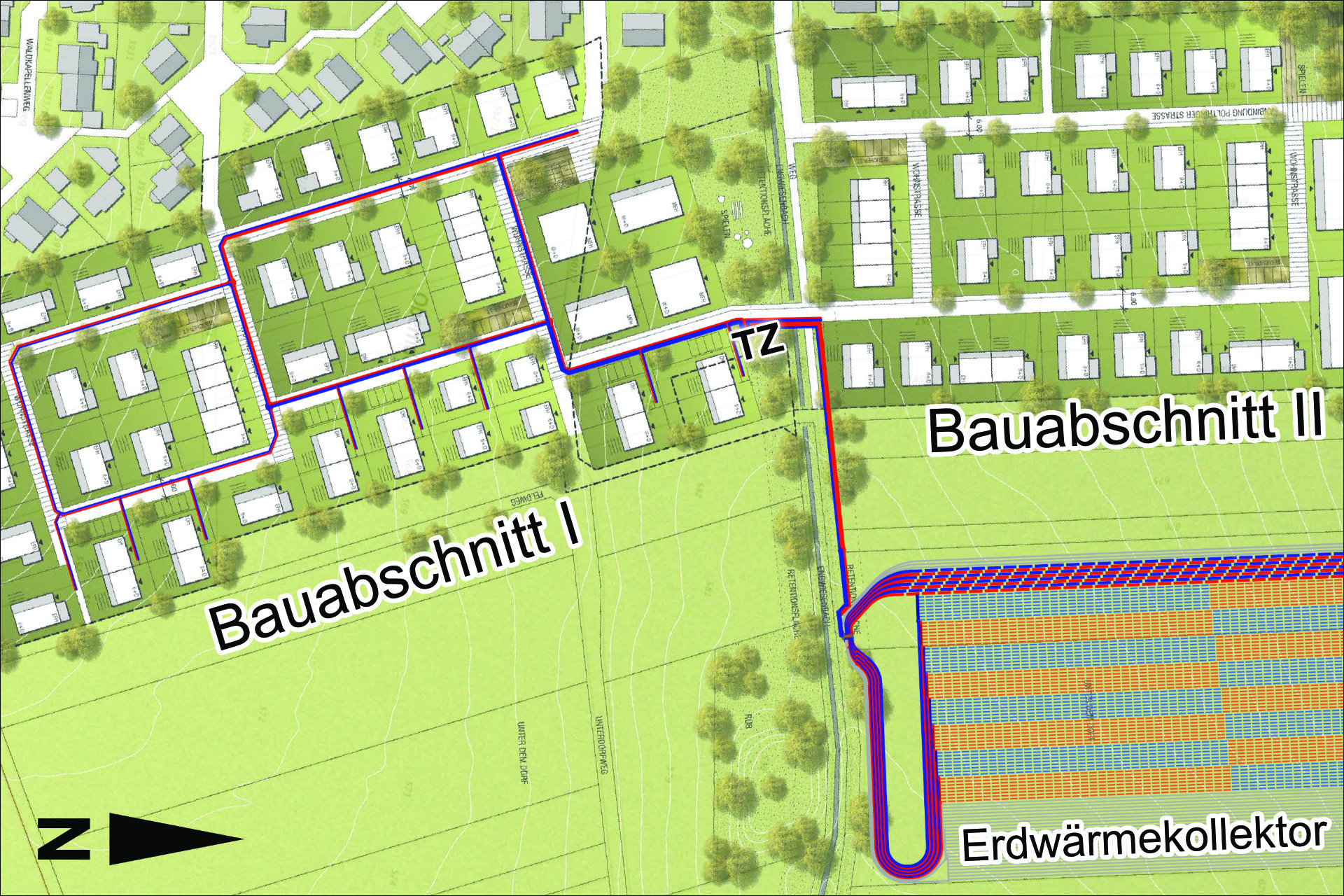
In Oberndorf, a district of the southern German town of Rottenburg, a new residential quarter is supplied with geothermal heating and optional cooling via a thermonet at a minimal upfront cost, lower than the cost of an air source heat pump. The thermal energy is collected from approximately 14,000 m² of horizontal ground loops ploughed…
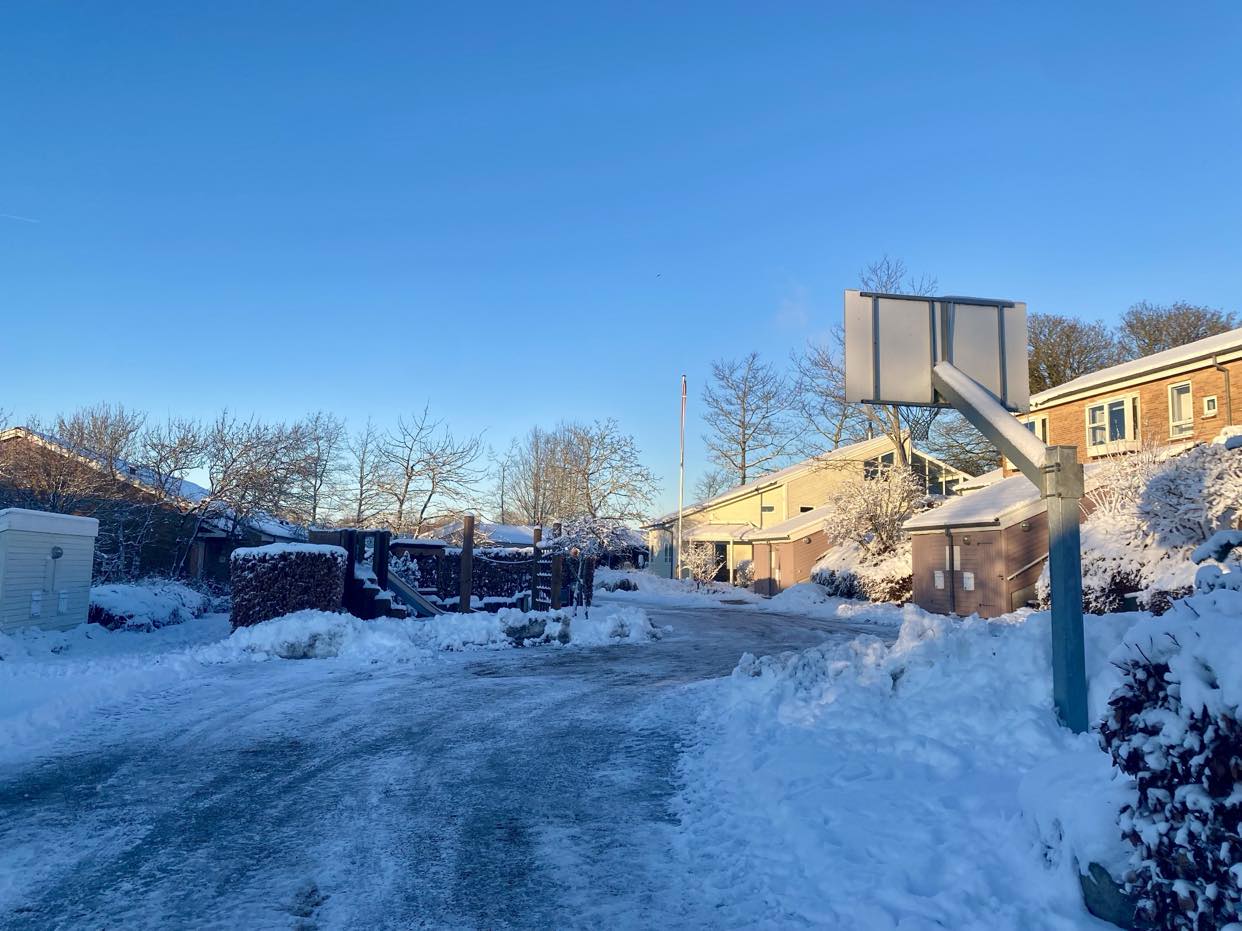
In Jystrup, near Ringsted in Denmark, a housing cooperative has addressed a challenge facing many residential associations in rural areas: phasing out fossil heating in dense, low-rise developments where conventional district heating is not economically viable. The Enghusene housing cooperative comprises two-storey terraced houses with 20 dwellings and a communal building. In 2025, the cooperative…
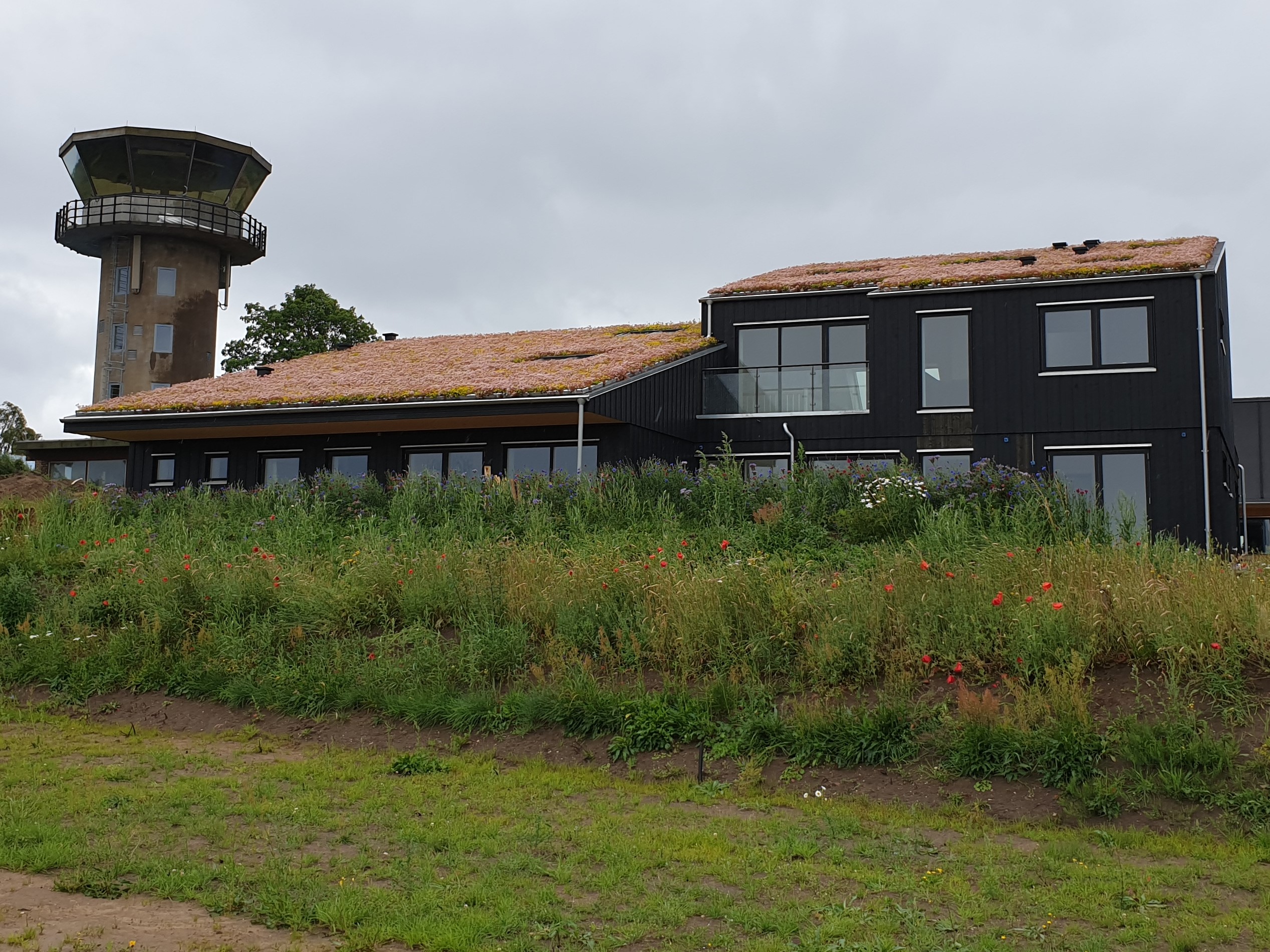
In 2019, the Mageløse residential community was established north of Copenhagen on part of the former Værløse Air Base. Thirty houses are supplied with heat extracted from a pump-and-treat remediation well. A thermonet connects the heat exchanger at the well with heat pumps installed in each connected house. The system provides residents with heating at…
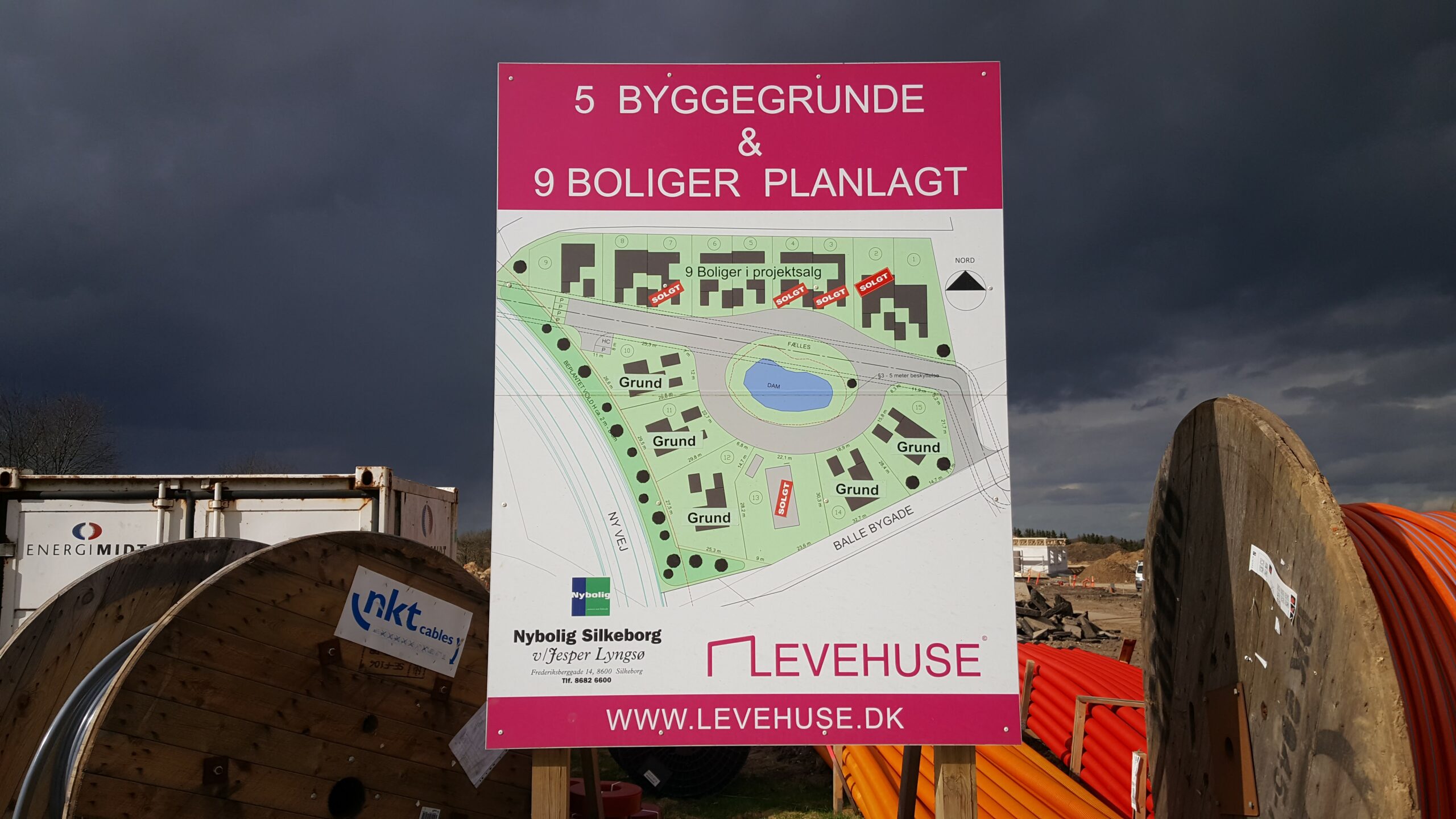
A local Danish district heating company, Silkeborg Forsyning, established a thermonet solution for 15 houses in 2017-18, including 14 newly built houses. Heat is extracted via shallow vertical geothermal boreholes. The thermonet itself and heat pumps in the connected houses were established as a demonstration project with support from Region Midtjylland’s development program FjernvarmeVækst. Houses…
In 2021, the residents in Vridsløsemagle, a small village west of Copenhagen, Denmark, got an offer to be supplied with district heating. It would be based on local extraction and distribution of shallow geothermal energy using a new-built thermonet. The residents until then mainly relied on oil boilers and wood stoves. The solution would be…
It is now possible to build roads that act as energy sources for a thermonet, delivering heating and cooling to the houses along the road. At the same time, the road structure functions as a subterranean stormwater reservoir, protecting against flooding from extreme rainfall.
Denmark’s largest thermonet to date was commissioned in late 2024 in the residential development of Hyllegaard Høje near Hvalsø on Zealand. It is designed to supply heating to 200 homes.